The Federal Ministry of Research, Technology and Space (BMFTR) published another call for research proposals under the "National Decade Against Post-Infectious Diseases." Researchers in Germany can still apply for funding for collaborative projects focused on investigating pathomechanisms until 27 January 2027. We summarise key elements of the new funding measure and place it in the context of the research conducted to date.
The “Guideline for the Funding of Interdisciplinary Consortia for Research into the Pathomechanisms of Post-Infectious Diseases” (external link), dated 20 October 2026, aims to enable research with the aim to further elucidate the disease mechanisms underlying post-acute infection syndromes (PAIS) and to identify potential starting points for therapeutic or diagnostic applications. It complements the first funding measure for clinical trials under the “National Decade”, which we summarised in our post from June 2026 .
What kind of research will be funded?
The new call for proposals focuses on Long COVID (or post-COVID syndrome) and post-infectious ME/CFS (Myalgic Encephalomyelitis/Chronic Fatigue Syndrome). Funded projects are intended to foster a better understanding of the development and diverse manifestations of these conditions, while also developing new approaches to more targeted prevention, diagnosis, and treatment. One of the goals is to identify pathomechanistically defined disease endotypes, that is, biologically distinct manifestations or subgroups of the conditions, in order to pave the way for future precision medicine in the treatment of PAIS.
The funding covers research approaches that originate from clinically relevant symptoms, such as post-exertional malaise (PEM), the cardinal symptom of ME/CFS, or postural orthostatic tachycardia syndrome (POTS), a disorder of the autonomic nervous system, as well as from defined organ-specific damage. In the context of ME/CFS, projects must utilise established diagnostic criteria (Canadian Consensus Criteria (CCC) or the Institute of Medicine (IOM) criteria). Furthermore, factors such as sex, age, and comorbidities should be considered. Research into the mechanisms of PAIS in children and adolescents is also eligible for funding.
Funding is provided for interdisciplinary research consortia that jointly and coordinatingly conduct their research. Within such a consortium, various disciplines (spanning both basic and clinical research) are expected to collaborate, jointly define research objectives, and ultimately synthesise their findings into a cohesive thesis. Research approaches must be grounded in a clearly defined, mechanistically sound, and experimentally testable hypothesis, for which preliminary evidence already exists and can be further investigated within the scope of the project. Specifically, this may involve the full spectrum of preclinical (e.g. laboratory studies, cell and animal models) and clinical research, aimed at elaborating on so-far identified mechanisms and developing strategies for their translation into prevention, diagnostics, and treatment. This includes, among other things:
- Mechanistic basic research:
Analysis and characterisation of disease mechanisms at the genetic, cellular, and molecular levels (e.g. involving the immune, metabolic, cardiovascular, or autonomic nervous systems). Furthermore, mechanisms of viral persistence or reactivation, as well as sex-dependent mechanisms of disease pathogenesis, may also be investigated. - Identification of predictive, diagnostic, or prognostic biomarkers relevant for patient stratification:
Derivation of mechanistically grounded, clinically relevant disease endotypes and validation of informative biomarkers or biomarker signatures for the differentiation of such disease subgroups. - Preclinical research for the development of new treatment approaches:
Validation of novel target molecules and proof-of-concept studies for new treatment approaches (conducted via exploratory and/or confirmatory animal and other preclinical models). - Preclinical disease models linked to specific pathomechanistic questions:
Advance development and validation of appropriate experimental model systems (such as animal models, organoids, or human-based cell and tissue systems), as well as the functional testing of mechanistic hypotheses and causal biological relationships within these models. - Systems biology and data-driven approaches:
Evaluation of existing, harmonised data sources to investigate genetic, cellular, and molecular disease mechanisms. Also, systems biology modelling of pathophysiological processes and the use of artificial intelligence (AI)-supported analyses to validate hypothesis-driven research approaches.
Interventional clinical research, purely exploratory projects lacking a clearly defined pathomechanistic hypothesis, and projects consisting exclusively of data modelling (including omics data) are not eligible for funding. Applications can be submitted by state or state-recognised universities, non-university research institutions, healthcare providers or facilities (such as hospitals or rehabilitation centers), and private enterprises.
The targeted period of funding is three years. There is currently no information available on the total amount of funding available under this call.
Participation of patient representatives and inclusion of severely ill patients
As with the first call for proposals under the “National Decade”, the new funding measure sets out specific requirements for applicants regarding the involvement of patient organisations and their representatives. Representatives are to be included at all relevant levels and throughout every project stage (from planning and implementation to the dissemination of results). We welcome this requirement, which aligns with our core demands from the initial planning phase of the “National Decade.” Just as in clinical research, the involvement of patient representatives can also help identify relevant research questions in basic research, ensuring that scientific inquiry is more closely aligned with the needs of patients.
It is also worth noting that consortia seeking funding should aim to include severely affected, housebound patients in their investigations. In our view, this should be implemented consistently: if study participants were primarily those physically capable of traveling to research sites, the resulting picture of the disease spectrum would likely be limited in range. Inclusion of the most severely ill patients therefore enhances the validity of scientific findings.
How does the new funding measure fit into the existing body of ME/CFS research?
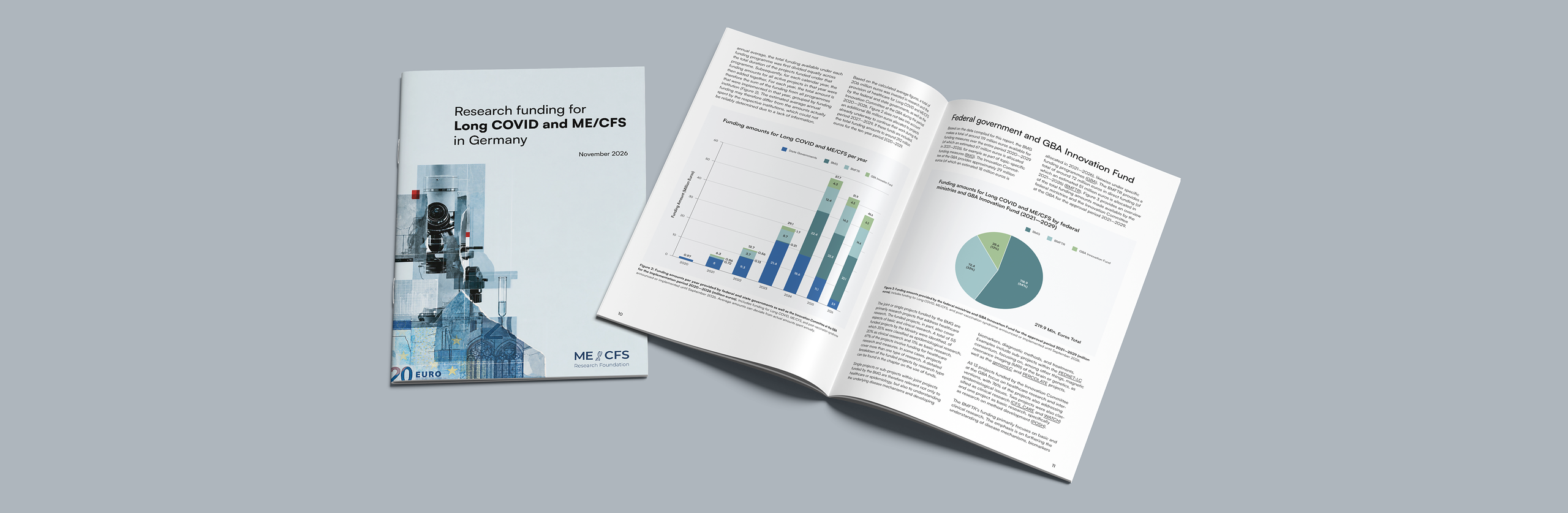
Our latest report on research funding for Long COVID and ME/CFS in Germany clearly shows that basic research is among the least-funded types of research to date. There is a significant funding gap when it comes to investigating the underlying disease mechanisms, both in terms of the total funding available as well as the number of projects implemented. It is therefore highly relevant that the second call for proposals under the "National Decade" addresses the field of basic research (as well as the area leading from basic into clinical research).
Since ME/CFS is a complex and heterogeneous disease, identifying its various manifestations, known as endotypes, is currently one of the greatest challenges. The new call for proposals addresses this very issue with its aim to facilitate projects that seek to uncover the underlying biological mechanisms specific to different subgroups. The goal is to establish reliable diagnostics based on clear biomarkers, which would allow for the stratification of patient subgroups for the development of targeted treatment approaches. Basic research thus serves as a crucial foundation for developing targeted and effective treatments.
The statement "Post-infectious Diseases – Healthcare, Data Infrastructure, Research, and Prevention" by the German National Academy of Sciences Leopoldina offers concrete starting points for shaping the new collaborative projects. It summarises the current state of research and identifies, among others, autoimmunity and chronic inflammation, endothelial and microvascular dysfunction, dysautonomia, impaired mitochondrial function, microbiome alterations, and viral persistence and reactivation as specific areas that should be investigated. In our view, the new funding measure adequately picks up these recommendations.
It should be noted that, while the funding measure’s focus on pre-existing hypotheses may facilitate the advancement of promising findings, it simultaneously limits the scope for open-ended research. Consequently, the "National Decade" requires additional funding avenues for novel, higher-risk approaches. This idea is also at the centre of our Research Funding Programme Furthermore, the call for proposals emphases the utilisation of existing data and biosamples, which is sensible, provided their quality aligns with the specific research question. However, issues such as the exclusion of certain patient groups — particularly relevant given the historical neglect of ME/CFS patients in research — inconsistent diagnostic criteria, or a lack of longitudinal data cannot be resolved simply by increasing the volume of data. It is therefore positive that the collection of new, supplementary data and biomaterials is also permitted under the current call.
What are next steps for the National Decade?
We view the new BMFTR funding measure as another important building block toward achieving the long-term, central objective of ME/CFS research: the development of targeted and effective treatment options that address the underlying disease mechanisms. We believe that the clear focus on mechanistic, interdisciplinary research, involving those directly affected, can contribute substantially to the advancement of this research field.
The success of the new funding initiative will depend on the selection and results of the funded projects as well as their translation to clinical research. For people living with post-infectious diseases, this remains the crucial point: that tangible diagnostic and therapeutic advances emerge from basic research.
How can you support the work of the ME/CFS Research Foundation?
While progress has been made, there is still a long way to go before diagnosis, care and treatment of ME/CFS patients will one day become an established medical and social standard. We at the ME/CFS Research Foundation are focussing on biomedical research, which we see as a key element in solving these problems (more on this in our research funding strategy and in the recent half year report, which summarises our activities). To achieve this, we rely on broad support from private donors – those affected, relatives, families, friends, associations, schools, networks, companies, initiatives, event organisers and all supporters. If you are not able to provide direct support, you can share our stories and motivate others to help. Because only together can we achieve. this goal.
We fully translate donations and other support into scientifically excellent research, networking and ultimately visible successes, i.e. improved ME/CFS diagnostics and therapies. We are happy to work together with other organisations and initiatives - please contact us!
We appreciate all kinds of support:
Please subscribe to our newsletter:
Thank you for your support!