Research funding for Long COVID and ME/CFS in Germany – new report provides overview
A new report by the ME/CFS Research Foundation provides, for the first time, an overview of publicly funded research and healthcare initiatives related to Long COVID and ME/CFS in Germany. The analysis includes 259 joint or single projects receiving a total of 292 million euros in funding over the period 2020–2029. The report covers funding provided by the federal government, state governments, the Innovation Committee at the GBA as well as the DFG, which have been announced or implemented until September 2026. The report conveys the distribution of funding by source and the allocation of funds by diseases, research types and interventions. The data fills a significant information gap and enable the assessment of the funding priorities set to date by providing a knowledge base that did not previously exist in this form.
What are the key findings?
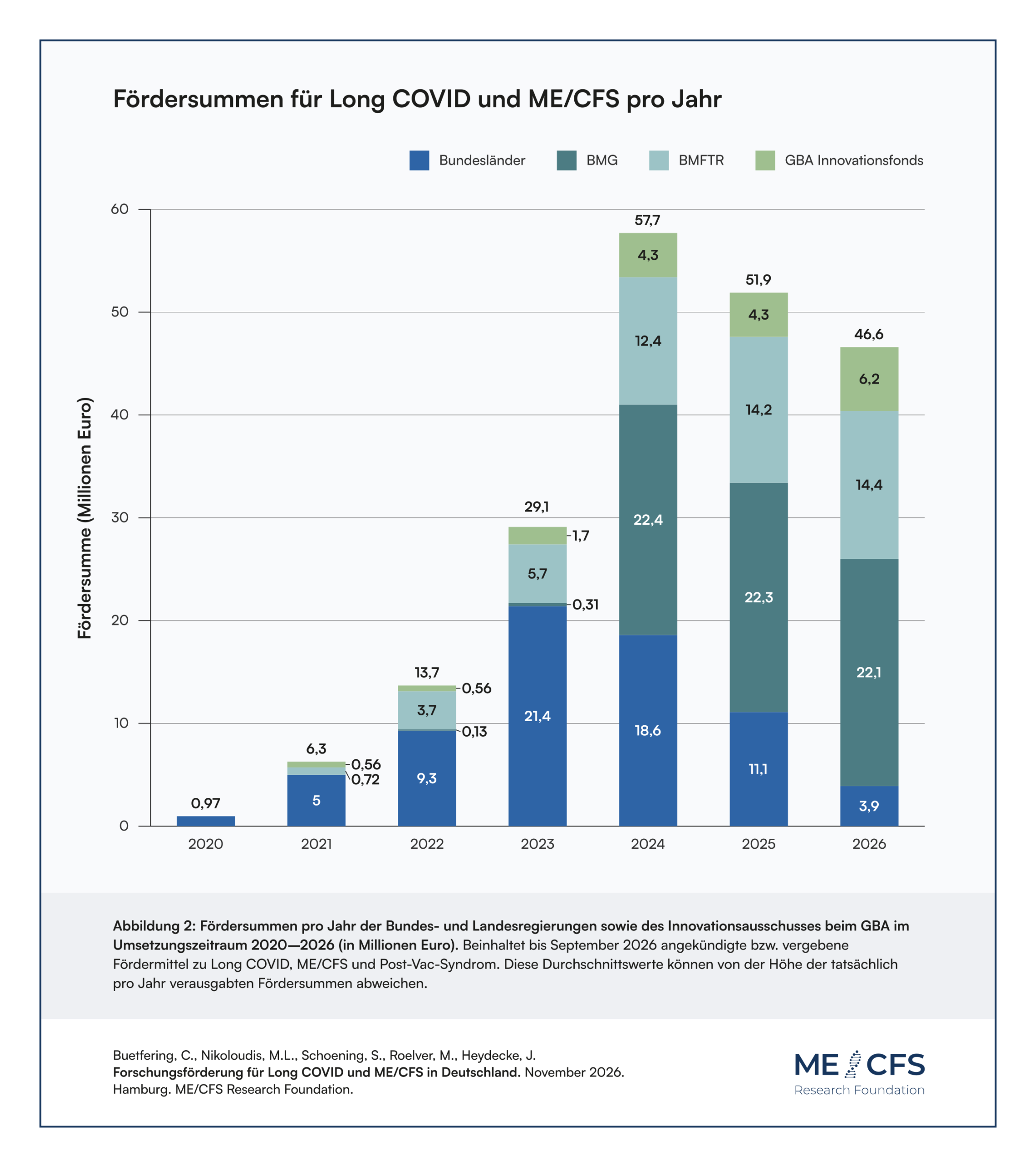
Through the funding measures implemented by the Federal Ministry of Health (BMG) and the Federal Ministry of Research, Technology and Space (BMFTR), the federal government is the largest source of funding in the field of post-infectious diseases. Between 2020 and 2026, a total of around 118 million euros in funding for Long COVID and ME/CFS research was allocated by the BMG (67 million euros) and the BMFTR (51 million euros). During the same period, the Innovation Committee at the Federal Joint Committee (GBA) spent around 18 million euros. The governments of the federal states allocated around 70 million euros between 2020 and 2026. Funding amounts for research enabled by the German Research Foundation (DFG). For the implementation period of 2020-2026 this amounts to a total of around 206 million euros in public funding.
If additional funding already allocated to ongoing projects and their continuation during the period 2027–2029 is included, the BMG provides a total of around 119 million euros. The Innovation Committee at the GBA provides approximately 29 million euros in total. The BMFTR provides a total of around 72 million euros in direct funding during the approval period 2021–2029. State governments provide a total of around 72 million euros over the entire period. For the entire ten-year period 2020–2029, the total funding provided by public bodies amounts to around 292 million euros.
Click on the image to open a detailed view and download the image in high quality.
Click on the image to open a detailed view and download the image in high quality.
Press coverage of the report
- Tagesspiegel (10 November 2026):
„Viel Forschungsförderung zu Long Covid – Wird der Kampf gegen ME/CFS vernachlässigt?“
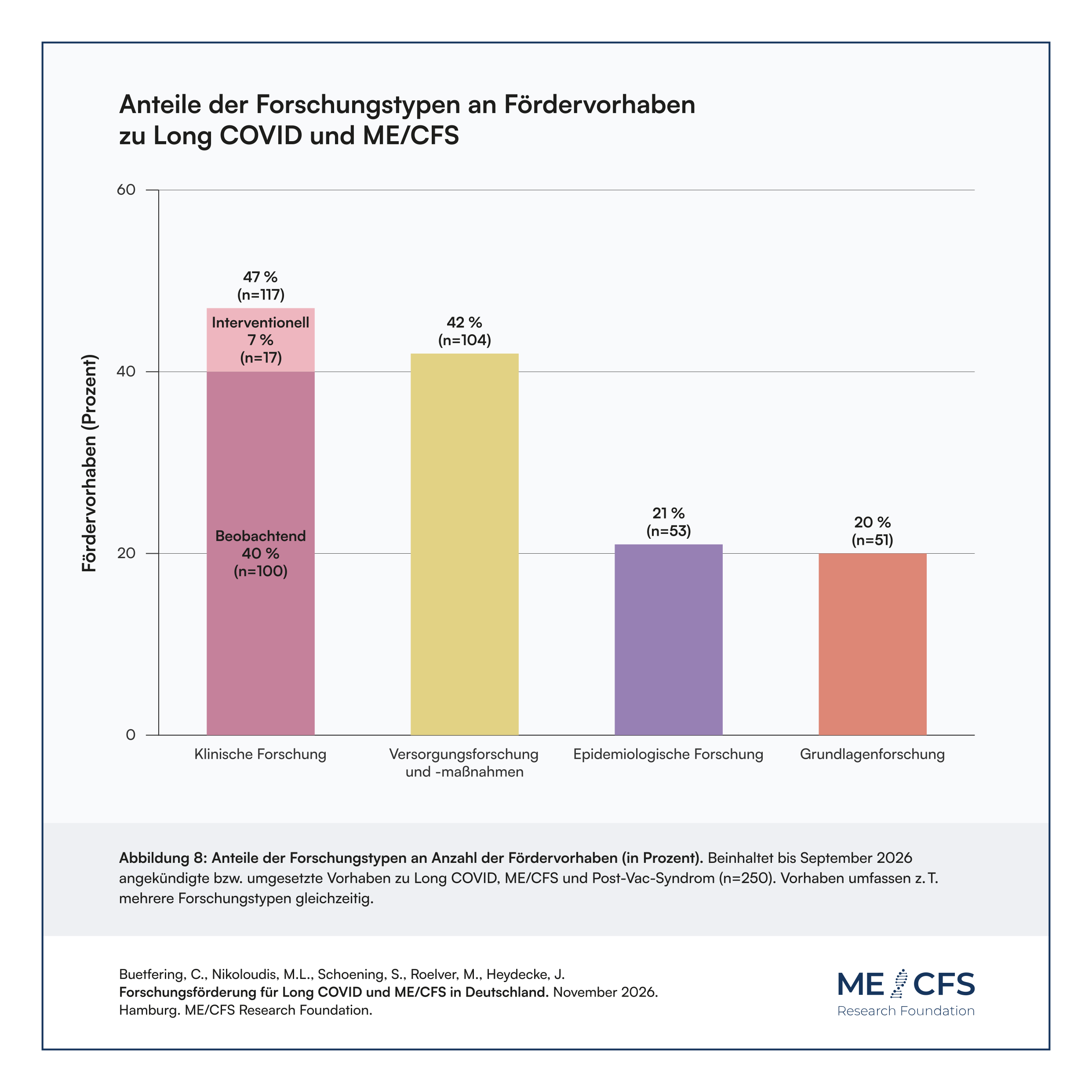
The analysis of funded projects points to a considerable funding gap in interventional clinical research and basic research. Only 7% and 20%, respectively, of the identified projects focus on these types of research, which are essential for uncovering disease mechanisms and developing biomarkers and treatments. The majority of projects fall into the categories of healthcare research and measures (42%) and observational clinical research (40%), as figure 8 shows. Projects can be assigned to more than one category, so that percentages may sum to more than 100%.
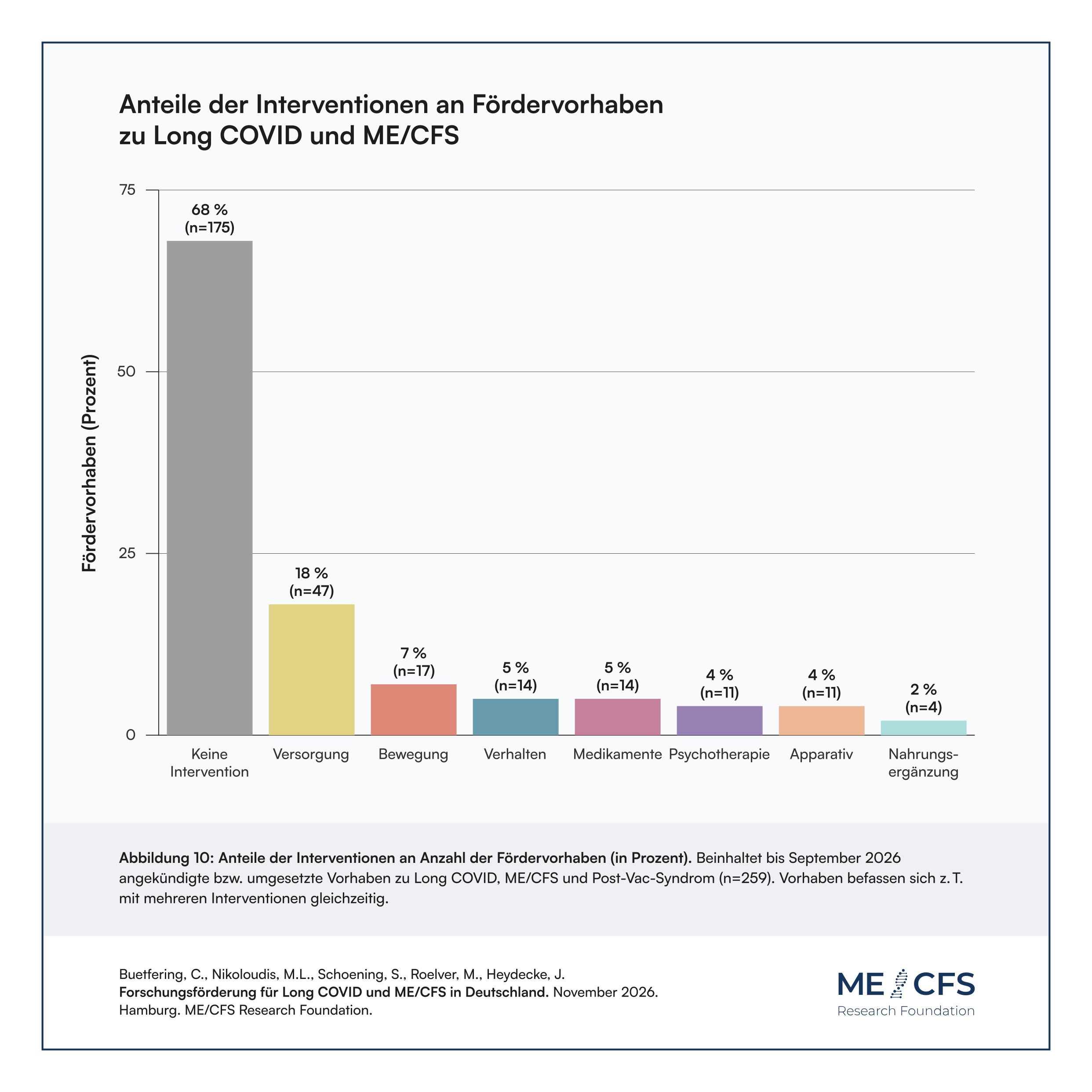
Treatments are investigated in only a few projects. Only 5% of funded projects investigate drug-based interventions. Device-based treatments are investigated in 4% of projects. 68% of all projects do not investigate any interventions. The remainder is divided between healthcare provision, exercise, behaviour and psychotherapy (figure 10).
Click on the image to open a detailed view and download the image in high quality.
Click on the image to open a detailed view and download the image in high quality.
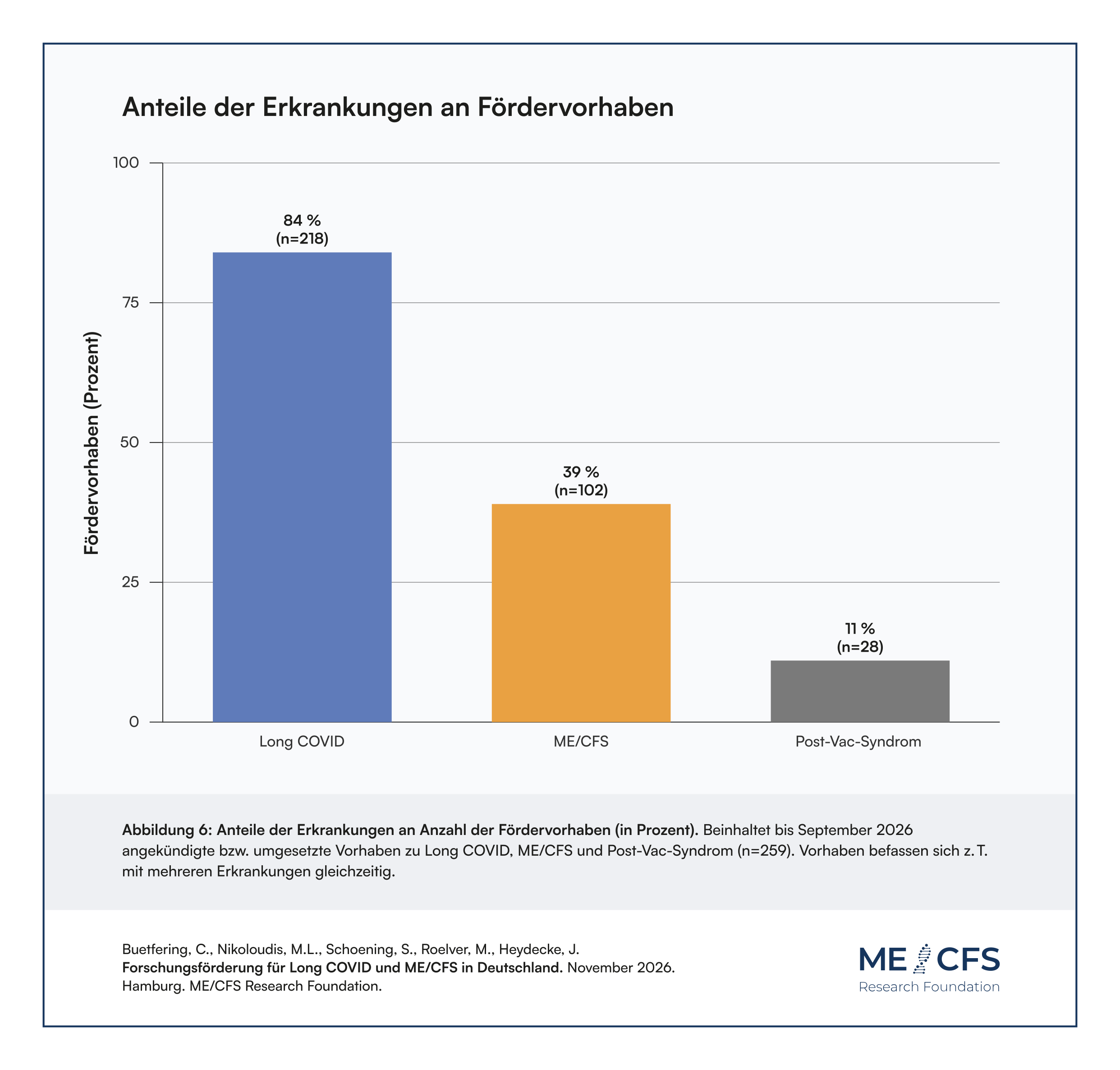
Additionally, ME/CFS receives markedly less attention than Long COVID. 84% of funded projects cover Long COVID, compared with 39% addressing ME/CFS, as illustrated by Figure 6. Some projects cover more than one condition and are therefore included in both percentages.
The current research funding amounts to only around 0.1% of the annual societal cost of Long COVID and ME/CFS. This figure indicates that a funding gap remains, even after accounting for all public funding already spent or announced, including the 500 million euros pledged over ten years under the "National Decade against Post-Infectious Diseases".
Data on funding for Long COVID and ME/CFS lack transparency. Only 209 million of a total of 292 million euros in funding (71%) could be attributed to specific projects. For the remaining 83 million euros (29%), it was not possible to identify how these funds are distributed across the identified initiatives.
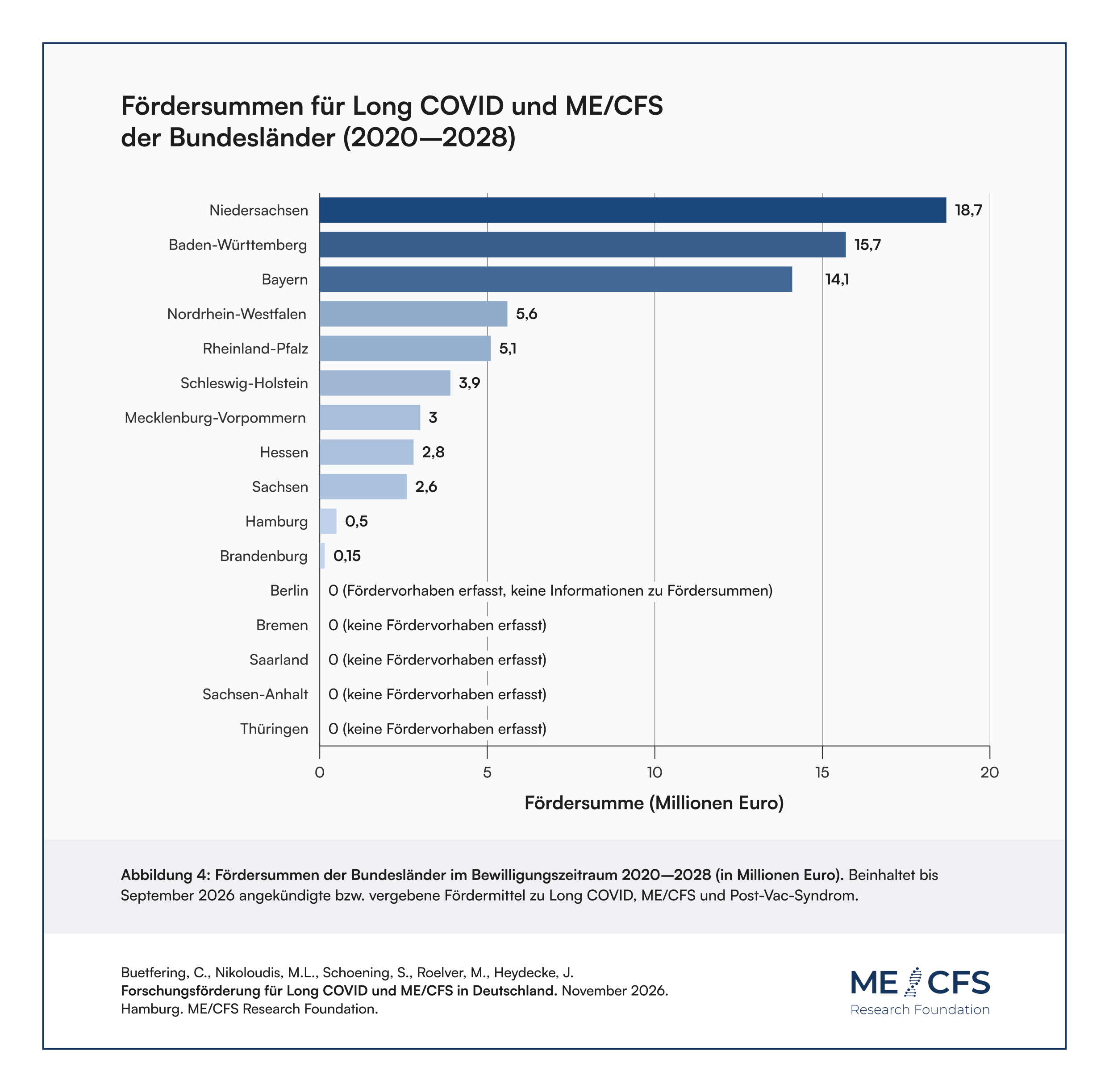
Over the entire period 2020–2029, state governments provide a total of around 72 million euros in funding (of which an estimated 70 million is allocated in 2020–2026). State funding thus accounts for one quarter of the total funding provided by the federal government, state governments and the Innovation Committee at the GBA over the entire period. The funding disbursed or earmarked by the state governments is distributed unevenly across eleven of Germany’s 16 federal states (Figure 4).
In terms of funding amounts, Lower Saxony (around 19 million euros), Baden-Wuerttemberg (total of around 16 million euros) and Bavaria (total of around 14 million euros) are among the largest state-level funders. Funding from the other eight states ranges from 0.15 to around 6 million euros per state. Overall, funding provided by the states has declined noticeably in the past three years.
Click on the image to open a detailed view and download the image in high quality.
Why is this data model important?
In the absence of any reliable data on the prevalence and the costs of Long COVID and ME/CFS in Germany, it has remained difficult for stakeholders, such as the German government and, for example, the country’s pharmaceutical sector, to measure up an adequate and justified response in terms of public spending and investment in research. Up until the end of 2025, some €150 million have been allocated to health care services research by the Federal Ministry of Health (BMG), with another roughly €50 million provided for clinical and basic research by the Federal Ministry of Research, Technology and Space (BMFTR). As such, the federal government spent approximately €40 million annually on Long COVID and ME/CFS research during the five-year period up until the end of 2025. Compared to the combined cost of both diseases in Germany in 2025 of €64.4 billion, average annual spending on research by the federal government equaled 0.06%. Some state governments, too, have made funds available for dedicated research projects. However, a coordinated, nationwide research strategy has yet to be implemented.
Some efforts by the federal government of Germany are underway to address the current evidence gap on prevalence and costs. Such efforts include the Federal Joint Committee (G-BA)-funded project BD-LC-PS and the BMG-funded projects MultiCARE and HELoCO.Results or even preliminary data from these projects are expected earliest at the end of 2026 and more likely in 2027 and beyond.
With any official data unlikely to be available soon, ME/CFS Research Foundation and Risklayer felt that it was important to provide new – and in the eyes of the authors currently still the most up-to-date and complete – estimates on the prevalence and cost of Long COVID and ME/CFS in Germany. With the release of the April 2026 update, both organisations intend to continue to inform wide-ranging discussions about how best to shape public policy, funding, research, and health systems to improve overall outcomes and reduce costs for people living with Long COVID and ME/CFS, communities, governments and society at large.
What are the recommendations?
German state and federal governments have been proactive in raising awareness and improving the overall care situation for people living with Long COVID and ME/CFS, as well as providing funding for basic, clinical and epidemiological research.
The end of 2025 saw the announcement of the „Nationalen Dekade gegen Postinfektiöse Erkrankungen“ (external link). Equipped with a total of €500 million over a period of 10 years, with it the German Federal Government has now announced an ambitious research programme. As part of the "National Decade", €50 million will be spent annually on research into post-infectious diseases. The goal is to better understand the underlying mechanisms of illnesses such as Long COVID and ME/CFS, to be able to develop targeted therapies. The latest report from Risklayer and ME/CFS Research Foundation contains concrete policy recommendations on how funding under the “National Decade” could be used to achieve a rapid and sustainable reduction in the modeled societal cost. The authors emphasise that the overarching goal must be to develop safe and effective therapies as soon as possible and make them available to all patients nationwide. Only in this way can an effective reduction of the considerable societal cost be achieved. These and other recommendations are detailed in the final chapter of the April 2026 report.
1. Invest in biomarkers, diagnostics, and treatments
In the absence of any reliable data on the prevalence and the costs of Long COVID and ME/CFS in Germany, it has remained difficult for stakeholders, such as the German government and, for example, the country’s pharmaceutical sector, to measure up an adequate and justified response in terms of public spending and investment in research. Up until the end of 2025, some €150 million have been allocated to health care services research by the Federal Ministry of Health (BMG), with another roughly €50 million provided for clinical and basic research by the Federal Ministry of Research, Technology and Space (BMFTR). As such, the federal government spent approximately €40 million annually on Long COVID and ME/CFS research during the five-year period up until the end of 2025. Compared to the combined cost of both diseases in Germany in 2025 of €64.4 billion, average annual spending on research by the federal government equaled 0.06%. Some state governments, too, have made funds available for dedicated research projects. However, a coordinated, nationwide research strategy has yet to be implemented.
Some efforts by the federal government of Germany are underway to address the current evidence gap on prevalence and costs. Such efforts include the Federal Joint Committee (G-BA)-funded project BD-LC-PS and the BMG-funded projects MultiCARE and HELoCO.Results or even preliminary data from these projects are expected earliest at the end of 2026 and more likely in 2027 and beyond.
With any official data unlikely to be available soon, ME/CFS Research Foundation and Risklayer felt that it was important to provide new – and in the eyes of the authors currently still the most up-to-date and complete – estimates on the prevalence and cost of Long COVID and ME/CFS in Germany. With the release of the April 2026 update, both organisations intend to continue to inform wide-ranging discussions about how best to shape public policy, funding, research, and health systems to improve overall outcomes and reduce costs for people living with Long COVID and ME/CFS, communities, governments and society at large.
2. Close the biomedical funding gap
Until the end of 2025, research on biomarkers, diagnostics, and treatments had accounted for only 22% (€50 million) of the cumulative total €221 million in funding allocated to ME/CFS and Long COVID research by the Federal Government of Germany since 2022. No more than 18% (€35–40 million) of this funding to date has been allocated to biomedical ME/CFS research. In contrast, approximately €157 million (or 71%) of all federal research funding for these diseases to date has been directed toward healthcare services research, including measures such as rehabilitation and psychotherapy. While the latter interventions assist some patients in managing their illness, they do not change the disease state, especially in people living with ME/CFS and Long COVID characterised by post-exertional malaise (PEM), and are thereby unlikely to reduce the societal costs reported here.
The model points to key leverage points for reducing the cost of Long COVID and ME/CFS around finding effective treatments and improving diagnostics (and so improving data and tailored care), alongside reducing infection rates (detailed in the May 2025 report). Closing the significant biomedical funding gap around these conditions in and through the "National Decade" agenda is therefore key to reducing costs and improving outcomes. This could include: (a) prioritising research on identifying pathophysiological disease mechanisms and establishing reliable diagnostics, with the aim of defining disease phenotypes and stratifying patient subgroups; (b) fast-tracking the development of viable pharmacological treatment options by trialing the repurposing of existing drugs and development of novel compounds; and, (c) inviting emerging fields of biomedicine to innovate in this area.
3. Accelerate research through learning and feedback loops
The The present results reinforce how time-critical change is in the area of Long COVID and ME/CFS, with costs continuing to mount even as new policy and funding is developed and deployed. One way the "National Decade" can expedite change is to support research infrastructures and networks of expertise in Germany – where expertise includes patient experts and managers alongside scientists and healthcare practitioners – to accelerate in parallel the generation, validation, implementation and scaling of already existing and still-to-be-generated evidence from Long COVID and ME/CFS research. One guiding principle must be to maximise the efficiency and speed with which effective therapies can be made available to patients, alongside safety and accessibility.
This could be achieved, for example, by (a) rolling out basic, translational, and clinical research (including in the form of drug trials) at an early stage at the same time, (b) using existing infrastructure such as adaptive platform trials, (c) enhancing feedback loops through collective work, and (d) enabling the participation of regulators, the private sector and industry. When it comes to creating, awarding and administering research funding, lessons from past shortcomings should be acknowledged and addressed in future. Research commissioning should include clear guidelines on disease definitions, diagnostic and inclusion criteria, with incentives for sharing lessons learned. Studies with overly broad inclusion criteria or insufficient emphasis on subgroup analyses which have often resulted in diluted findings should be avoided. There are also opportunities for efficiency in harmonising studies and trials to ensure the timely and efficient use of resources and comparability of results.
4. Incentivise collaboration and open science
The successful development of the model presented here is underpinned by bringing together diverse types of expertise to deliver a research outcome that is open to public sharing and scrutiny. Such collaboration and openness can lead to greater pace, innovation and real-world impact of research, without compromising quality. For this reason, another guiding principle that would benefit the "National Decade" is to incentivise open data and collaboration rather than competitiveness at all stages of delivery.
The "National Decade" should continue to build on the accumulated evidence and knowledge from ME/CFS and Long COVID research in Germany and internationally – both published and in the form of experience. Bringing together medical practitioners with direct experience in diagnosing and/or treating these diseases, patient experts and people with lived experience, in all stages of the work – from strategic decision making to designing calls for funding, reviewing funding proposals to implementing research – will ensure Germany capitalises on the landscape of expertise it has already fostered, and which sits behind the "National Decade".
5. Improve data collection
In the April 2026 update, the model continues to point to the importance of reducing the overall SARS-CoV-2 infection load throughout the population. Recommendations relating to public health measures on preventing the spread of infections (see May 2025 report), including improving air quality, are still relevant here. In addition, there is a need to maintain existing and build improved data collection infrastructure for infectious diseases (e.g. by continuing RKI’s AMELAG wastewater virus monitoring). Improved disease surveillance will be necessary to better identify hotspots for targeted public health interventions, at-risk groups, and to ultimately monitor and evaluate the effectiveness of the "National Decade" in the longer-term.
While the present model continues to be key to informing decision-making around post-infectious diseases in Germany, eventually good real-world data should replace the need for stochastic modelling. The work of data collection to this end is beyond the scope of the "National Decade", which underscores the importance of cross-agency collaboration and additional investment to improve outcomes and reduce costs around Long COVID and ME/CFS in Germany.
Download full reports
Download full report
How was the data collected?
For this report, the ME/CFS Research Foundation collected information on funds allocated to research and the provision of healthcare for Long COVID and ME/CFS in Germany from 2020 onward. The database comprises a list of joint or single projects, each of which has been thoroughly reviewed, categorised, and classified on the basis of the available information. Project-level classifications include the conditions investigated (ME/CFS (including non-COVID-associated ME/CFS), Long COVID, post-vaccination syndrome), project duration, funding amount, type of research (basic research, clinical research (observational or interventional), epidemiological research, and healthcare research and measures), and the interventions studied (drugs, dietary supplements, device-, exercise- or behaviour-based interventions, psychotherapy, and healthcare). Each project was also assigned to the corresponding funding programme and source of funding.
The data was collected through two approaches: standardised enquiries to relevant institutions and analysis of publicly available sources. First, between January 2025 and August 2026, ministries and agencies responsible for health and research in each of Germany’s 16 federal states were asked to provide information on funding for research and healthcare measures announced or initiated since 2020. The enquiries followed a standardised format and concerned specifically Long COVID and ME/CFS projects, both already implemented and planned, within the framework of joint or single projects in basic research, clinical research, epidemiological research and healthcare. Excluded from these enquiries were the states’ budgets for routine healthcare funding (e.g. for university hospitals).
In addition to direct enquiries to state ministries, publicly available information on funding provided by the BMFTR, the BMG and Innovation Committee at the GBA was taken into account. No direct enquiries were made to the federal government or the Innovation Committee, as information on projects funded by these institutions is generally available in sufficient detail through topic-specific websites and in documents published by the German Bundestag. The investigation also examined projects with a specific focus on Long COVID or ME/CFS that receive funding from the DFG. The review also incorporated publicly available funding announcements, project descriptions, annual reports and press releases from federal and state ministries, as well as research institutions, universities and hospitals. Where possible, this information was cross-checked against details provided in direct responses from state ministries and other sources.
Due to various constraints, projects conducted by these research institutions could not, with a few exceptions, be included in this report (see the chapter on limitations in the report). These institutions include the German Centres for Health Research (DZG), the non-university research institutions Helmholtz Association, Leibniz Association, Max Planck Society, and Fraunhofer Society as well as the Network of University Medicine (NUM), including its sub-project, the National Pandemic Cohort Network (NAPKON).
What are the recommendations?
Until 2020, there was virtually no public funding for ME/CFS in Germany. Since the emergence of COVID-19, scientific and societal attention to post-infectious diseases – particularly Long COVID and ME/CFS – has noticeably increased. During this period, funding initiatives have been introduced at federal and state levels and expanded over the years.
The "National Decade Against Post-Infectious Diseases" sets out a new chapter in Long COVID and ME/CFS research in Germany. Between 2020 and 2025, funding initiatives for research into both conditions were often fragmented, equipped with comparatively modest financial resources, and initiated without coordinated objectives by the federal and state governments. The "National Decade" now offers the opportunity to set forth a targeted research agenda designed to help understand the causes of these conditions, develop treatment options and, as a result, improve the provision of healthcare nationwide.
This report provides a first overview of the funding landscape and the allocation of public funds. By identifying existing research needs, the report is intended to support the funding allocation under the "National Decade" and beyond. The findings provide a basis for assessing the current state of public research funding and developing recommendations for future funding priorities.
1. Close the funding gaps
Based on project numbers, the findings suggest a funding gap for basic research and interventional clinical research. Yet, these types of research are essential for the development of biomarkers and treatments, and for elucidating the underlying disease mechanisms. The aim should therefore be to fund considerably more research projects in these areas.
The funding gap in basic research and interventional clinical research is also evident in the funding amounts identified. Of the 209 million euros in total funding allocated to 196 projects identified (out of 259 projects in total), only 16% (34 million euros) goes towards basic research and 8% (16 million euros) towards interventional clinical research. The current funding gap in biomarker and treatment development should therefore be closed as quickly as possible, also in terms of the level of funding made available, to pave the way for better diagnostic and treatment options for these severe diseases.
Even taken as a whole, the 292 million euros allocated to date across all research types over a ten-year period (2020–2029) is disproportionately low relative to the societal cost of Long COVID and ME/CFS, which amounts to around 64 billion euros annually (Daniell et al., 2026). The additional 500 million euros earmarked for the "National Decade against Post-Infectious Diseases" over ten years will not fundamentally alter the scale of this disparity, as the following rough calculation illustrates: If public funding institutions were to maintain their current level of funding roughly at 2026 levels – and if BMFTR funding under the "National Decade" were increased to 50 million euros annually – total annual public research funding would amount to around 80 million euros from 2027 onwards. This funding amount corresponds to only around 0.1% of the annual societal cost of both diseases. In addition to the aforementioned funding gap in biomarker and treatment research, a substantial absolute funding gap would therefore remain when measured against the cost.
2. Focus on treatment development
The data show that research into drug-based (5%) and device-based (4%) interventions accounts for only a small proportion of funded projects on ME/CFS and Long COVID. Only 9% of the funding (18 million out of 209 million euros) could be attributed to drug research. Yet, effective and widely available drug treatments are regarded as a key means of increasing recovery rates and lowering the disease burden and, consequently, reducing the societal cost of both conditions in the long term.
Symptom-oriented healthcare models remain indispensable, but so far their impact on the course of these diseases has been very limited. They are no substitute for the development of disease-modifying treatments that target the underlying biological causes. The development of causal treatment approaches, alongside the identification and validation of suitable biomarkers and the development of diagnostic methods, must therefore be pursued with considerably higher priority than has been the case to date.
In view of the historical research deficit, the guiding principle of the "National Decade" should be to save as much time as possible in the development of drug treatments and their translation into standard clinical practice. This requires a consistent and coordinated approach to conducting basic and clinical (as well as translational) research in parallel, for example by funding clinical trials and projects investigating pathomechanisms, as already announced within the framework of the "National Decade".
3. Strengthen ME/CFS research
Relative to the number of cases (757,000 Long COVID and 657,000 ME/CFS cases in 2025, according to Daniell et al., 2026), the data reveal an imbalance in favour of Long COVID research and healthcare. Long COVID was the subject of research or healthcare in 84% of all funded projects, whereas ME/CFS was identified in only 39%. Funding amounts, too, reveal an unequal distribution between the two diseases: the 94 million euros identified for ME/CFS fall considerably short of the 178 million euros allocated to Long COVID.
Despite the high disease burden, virtually no research funding was available for ME/CFS in Germany until the emergence of COVID-19. Whilst the COVID-19 pandemic and the emergence of Long COVID have led to increased awareness of ME/CFS, the research deficit accumulated over decades has not been overcome. In ME/CFS, the "National Decade" therefore faces a disease for which gaps in research and healthcare have scarcely been addressed to date. Greater consideration of ME/CFS within Long COVID research alone (as one of the manifestations of Long COVID) is not sufficient to remedy this historical deficit. Future funding priorities should therefore include a clear focus on research into ME/CFS as a distinct clinical condition. Greater consideration should be given to pre-pandemic cases and, more generally, to ME/CFS arising from infections other than COVID-19 as well as other triggers.
4. Create transparency around research funding
More transparency in research funding is a key prerequisite for ensuring that future investment in Long COVID and ME/CFS research is targeted in line with actual needs. The existing information gaps could not be fully resolved within the scope of this report, despite the comprehensive information research underpinning it. The funding total of 292 million euros identified should therefore be regarded as an approximate figure. Furthermore, only 71% of this total could be systematically allocated to the identified projects and categorised accordingly. For the remaining 29% of the funding (83 million euros), information on the specific use of the funding is lacking.
To bring greater transparency to the research landscape on post-infectious diseases, consideration should be given to establishing a centrally coordinated and publicly accessible data and information platform (e.g. similar to the ME/CFS Research Register). In addition to providing information on overarching categories such as research types, diseases and funding amounts, such a platform could map the substantive and methodological focus of ongoing and completed research projects and thereby serve as a basis for future funding decisions. The platform could help assess the expected gains in knowledge from new projects in relation to those from ongoing or completed projects, and enable existing research gaps to be addressed in a more targeted manner (particularly within the context of funding allocation under the "National Decade").
What are the limitations of the report?
The data presented in this report were obtained from a variety of sources and are subject to several limitations that should be considered when interpreting the analyses. Limitations relate to the completeness of the data collected, the scope of the identified projects, and the assignment of funding amounts to different diseases. The database, created for the first time for this report, should be regarded as the best possible reconstruction of the information currently available.
At the level of state governments, responses were not received from all institutions contacted. No information is available for Thuringia. For each Bremen, Hesse, Mecklenburg-Western Pomerania, Lower Saxony, Saxony, and Saxony-Anhalt, responses were received from only one of the two ministries contacted (Table 1 in the report). For these states, and where the information provided was incomplete (e.g. missing data on the amount of funding at the project level), publicly available sources were consulted to supplement the data. Even with this additional research, it was not possible to obtain all the missing information. Consequently, it cannot be guaranteed that the database includes every funding measure initiated by federal and state governments. Furthermore, certain analyses, such as those relating to total funding amounts, could only be performed for a subset of the identified measures. Although all of the funding could be identified at the level of the funding programmes, it was not possible to attribute 29% of the entire amount to specific projects.
It should be mentioned that research institutions in Germany (DZG, NUM/NAPKON and non-university research institutions) play an important role in research on post-infectious diseases. However, the nature and scope of their research activities, such as specific project details or funding amounts, are difficult to ascertain and cannot be presented with a high degree of reliability. Consequently, the activities of these institutions have, for the most part, not been included in this report. Greater transparency on how these research institutions use their funds would contribute substantially to a better understanding of the field and to the shaping of future research policy on post-infectious diseases.
A notable limitation concerns the classification of funded projects into joint projects or single projects. For the purpose of this report, joint projects, that is groupings of several single projects within a larger collaborative project, were disaggregated into their constituent single projects whenever sufficient and distinct information was available. Consequently, the total number of projects (259) should be understood as a minimum figure. It comprises both joint projects, which may, in practice, consist of single projects for which no further details are publicly available, and clearly identifiable single projects.
Another limitation concerns the allocation of funding amounts. Although sufficient information is available to present the total funding amounts in the context of the overarching federal and state government funding programmes (Figure 2), it is not always possible to determine precisely how much funding was allocated to individual projects within these programmes. In several cases, information on the specific amount granted to individual projects is missing. Consequently, the analyses of funding amounts presented in the chapter on the use of funds cover only 75% of all identified projects.