
2025 was a good year for ME/CFS and Long COVID research overall. Our efforts to increase biomedical research, too, were successful. Thanks to the excellent work of our team and steadily growing donations from our supporters, we will again be able to make a significant impact in 2026.
In the second half of 2025, we expanded our activities and continued to implement already initiated projects (see our reports from summer 2025 and winer 2025). This winter 2025 report is structured around our five areas of intervention:
- Funding research
- Networking of researchers
- Making research progress transparent
- Facts and resources for education and information
- Fundraising and awareness (and use of donations)
1. Funding research
Projects listed on our website in the research area were complemented in the second half of 2025 by the following 2 additional grants at Charité – Universitätsmedizin Berlin :
- Junior research fellowship for a "Comparative Study of Healthy Control Subjects and Patients with ME/CFS Using Questionnaires, Handgrip Strength Measurement, Cognitive Testing, and Laboratory Markers" (see announcement)
- Biomarker study on brain changes in ME/CFS and their evaluation as potential imaging markers (see announcement)
- Two further research projects, the details of which we are only permitted to disclose once the researchers have published their findings.
Results of these projects will be published after data are officially available.
Since its founding, the Foundation has (co-)funded a total of 11 research projects (including two early fundings in the run-up to the publicly funded research network National Clinical Study Group (NKSG), see our first report from December 2023).
What is next?
Our funding focus so far rested on maintaining and expanding ME/CFS research networks established in Germany since 2022. Our research funding strategy was revised in the fall and adapted to current developments, particularly the "National Decade Against Post-Infectious Diseases" announced by the German Federal Government at the end of 2025 (external link).

Our Research Funding Programme 2026, which we developed with our Scientific Advisory Board , in February via a call for proposals for new projects, which will include all the details on the application process and selection criteria.
2. Networking of researchers
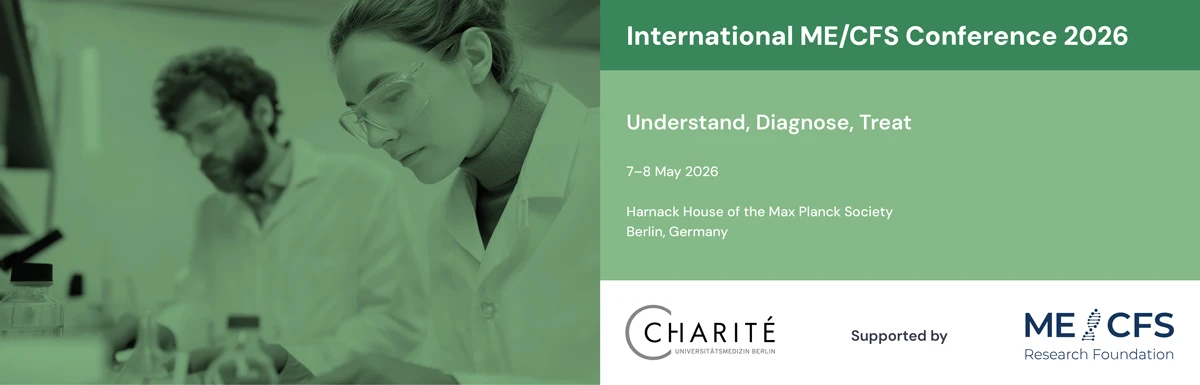
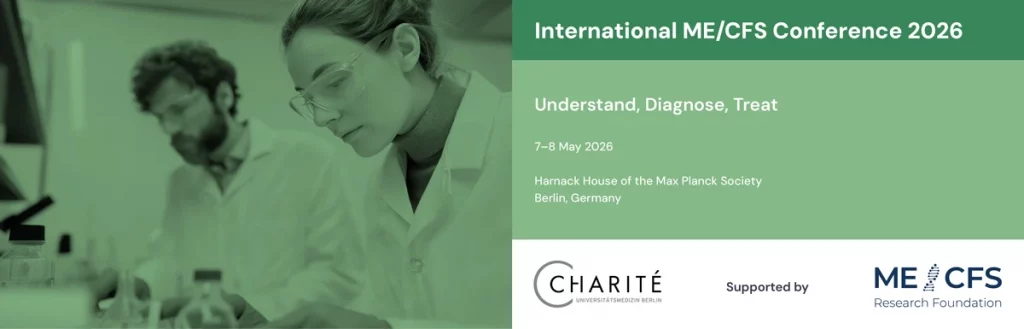
International ME/CFS Conference 2026: This annual, hybrid conference, organised in cooperation with the Charité Fatigue Center, will take place in Berlin next on 7-8 May 2026, and will be streamed live online.
Registration for online participation will open in the beginning of February. The English-language part of the Conference will focus on the latest findings from ongoing ME/CFS research as well as post-COVID syndrome.
A German-language symposium for the general public will be held on the afternoon of the second day of the Conference. As with the International ME/CFS Conference & ME/CFS Symposium 2025 , summaries, videos, and presentations will be made available online after the event.
ME/CFS Research Register: This systematic overview of the ME/CFS research landscape provides information on research projects, working groups, publications, events, and other details. In November 2025, the register was expanded to include Norway and Iceland and now covers a total of 6 countries. The register is continuously updated and will be gradually expanded to include more countries.
3. Research transparency
In September 2024, we published the ME/CFS research update for Germany and Austria , and in November, we provided an overview of the 21 BMBF-funded basic research projects . Later, we added supplementary overviews of ME/CFS research in Switzerland and the Netherlands as well as in Norway and Iceland . For the ME/CFS Research Register, we are planning to improve and expand the display of data on research, in the style of our previous research updates (planned for the second half of 2026).
4. Facts and resources for education and information
Prevalence and cost of Long COVID and ME/CFS in Germany: data from our joint study published in May 2025 (link) has been widely used by the press, policy makers, and in public discourse.
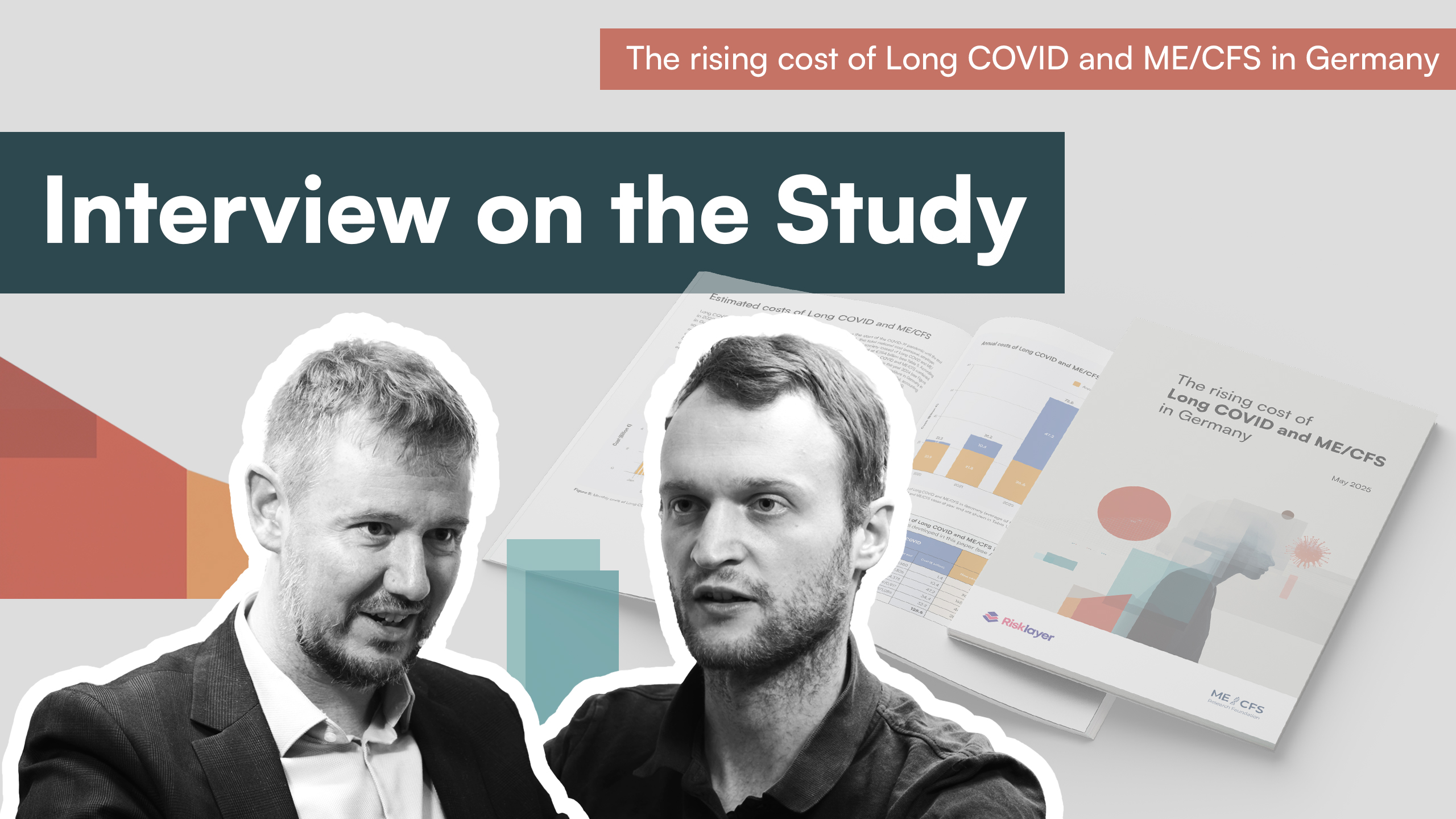
In a background interview, our project partners from Risklayer elaborated on the study’s details and their motivation for this project (link). To keep the study data up-to-date as an important basis for ongoing discussions, we are currently working on an update that will include prevalence and cost data as of December 2025.
Internationale Deklaration zur Unterstützung der Forschung und Arzneimittelentwicklung für ME/CFS und Long COVID:Following the International ME/CFS Conference 2025, leading international experts signed a joint declaration (link). They call for a global and collaborative effort to significantly expand biomedical research and accelerate the development of curative treatment options for ME/CFS and Long COVID.
Political Engagement
As a result of our activities and the study mentioned above, we were invited to various meetings with the German Federal Government in the second half of 2025:
- • October 2025: Meeting with Federal Minister of Health Nina Warken, together with Prof. Dr. Carmen Scheibenbogen (link to Instagram)
- November 2025: Kick-off event “Alliance for Post-Infectious Diseases: Long COVID and ME/CFS,” organised by the Federal Ministry for Research, Technology and Space (BMFTR) and the Federal Ministry of Health (BMG), with Federal Ministers Dorothee Bär and Nina Warken, as well as many representatives from government and the healthcare system (external link)
- 17 December 2025: Public discussion in the Research Committee on the “National Decade Against Post-Infectious Diseases.”, where we provided our expert opinion and demands for the strategic design of the “National Decade” (link)
Together with several patient organisations (including the German Association for ME/CFS, Fatigatio, and Long COVID Germany), our goal is to constructively support the concrete implementation of the "National Decade". Our joint aim is to ensure that biomarker and diagnostic research advances, therapies are developed, and the care of ME/CFS patients is put front and centre for it to sustainably improve.
In this context, we are currently working on a new data project – an overview of all public funding for Long COVID and ME/CFS research at the federal and state levels. This new report will provide transparency on funded projects and supply information on the use of the funds under the "National Decade."
5. Fundraising and awareness (and use of donations)
Donations provide the financial basis for our work. In 2025, we successfully expanded our fundraising and awareness efforts to the following extend:
- Growing number of fundraising events by those affected, their families, associations, schools, initiatives, and companies for various occasions;
- Additional awareness campaigns in professional football, in cooperation with the Empty Stands initiative, e.g. at HSV in November 2025 (link to Instagram);
- First items for sale in our fundraising shop, where we provide materials for fundraising campaigns at production costs; and
- "€5 for 5 things" fundraiser campaign, through which we have been offering gift donations (not just for Christmas) and donation subscriptions since December 2025, successfully implementing the idea that "when we all work together, we can achieve a lot."
The Foundation's financial income stems from direct donations to the ME/CFS Research Foundation and indirect donations (e.g. from other foundations, companies, large donors). The latter is made available to specific, pre-selected research projects in close consultation with the donors. Administrative costs arising for the Foundation are borne by the founder. Our donation volume developed markedly in 2025. At more than €1.17 million, direct donations more than doubled compared to the previous year. This growth is based on a steadily increasing number of donors. Thank you!
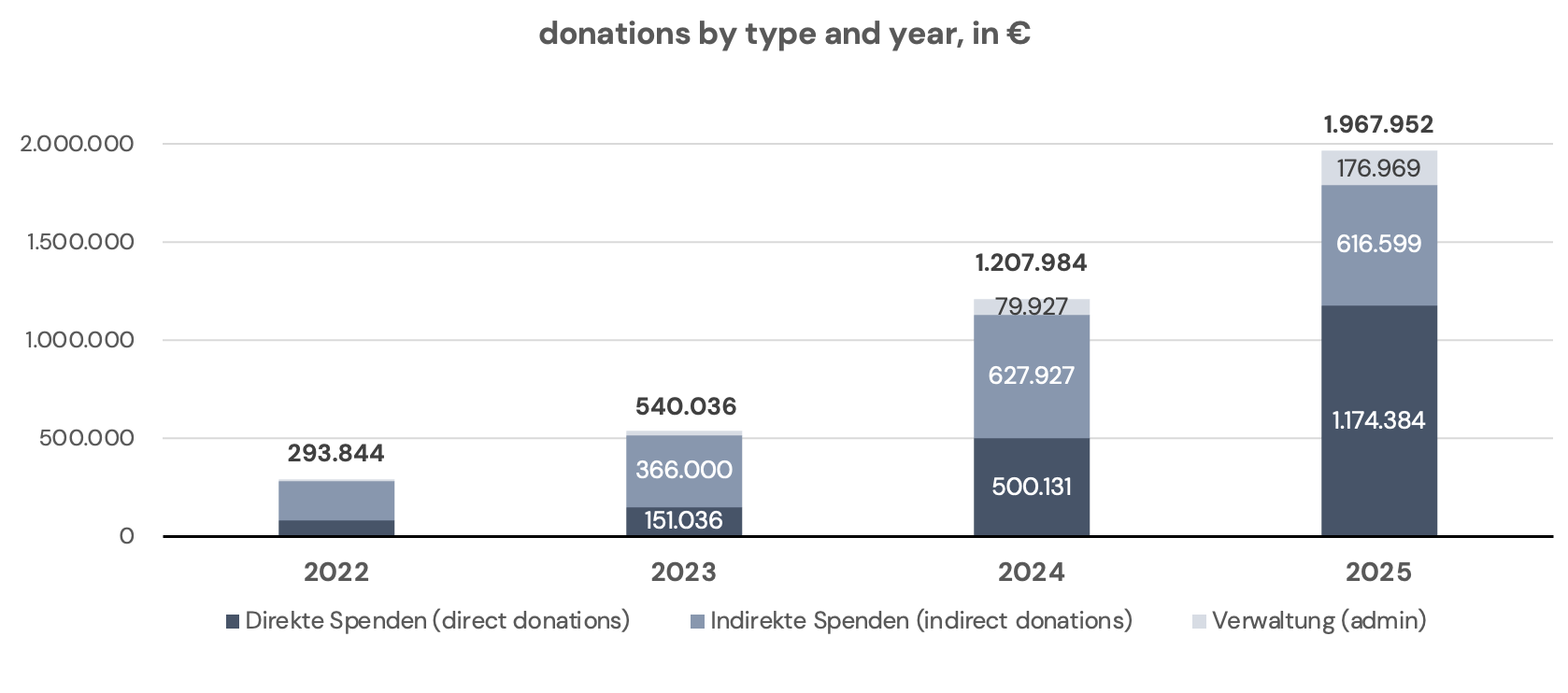
Indirect donations, at €0.62 mln, were roughly on par with the previous year. Due to extending our activities, administrative costs (not covered by donations) rose to almost €0.18 mln in the last year.
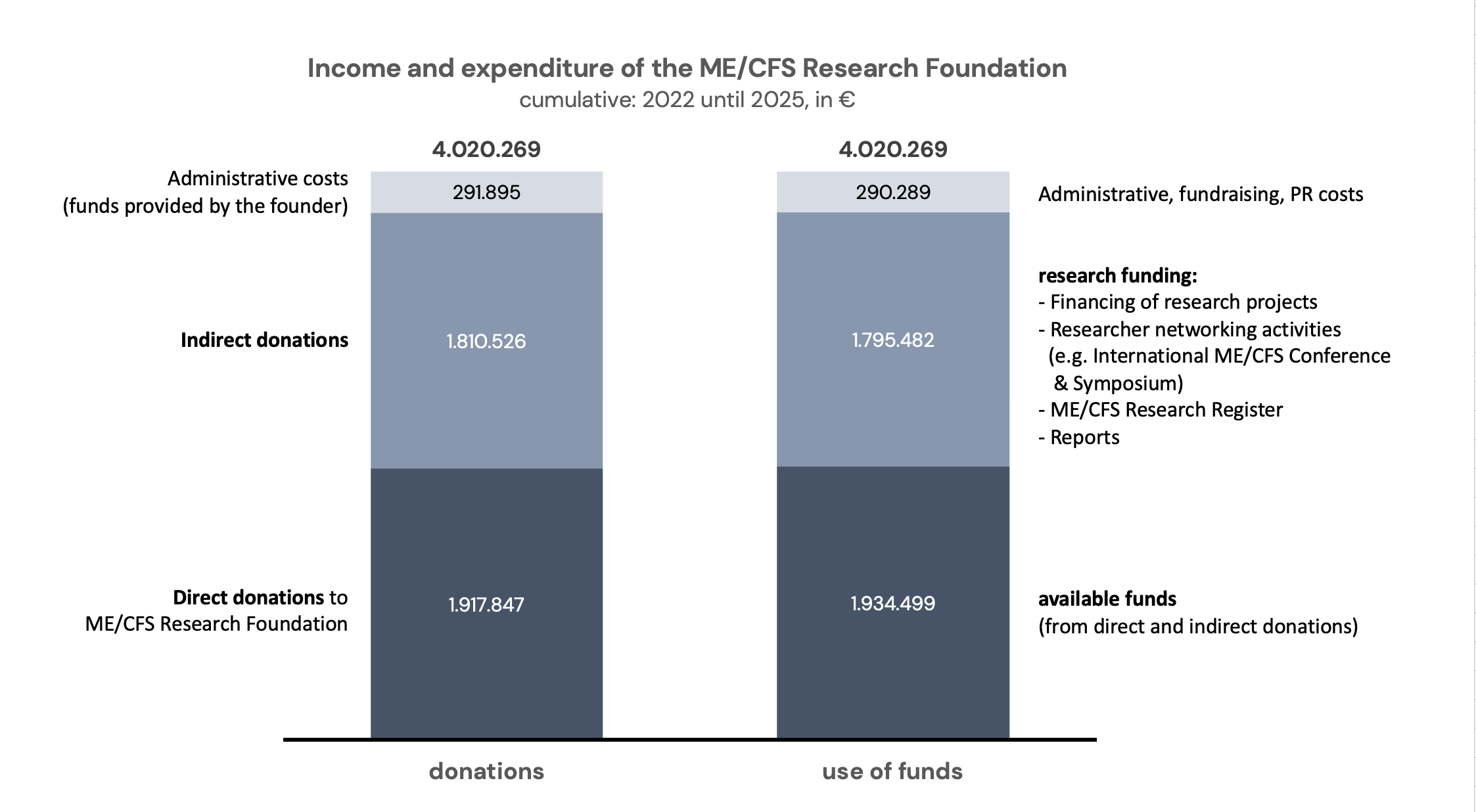
Since its founding, the ME/CFS Research Foundation has raised over €4 mln in total . Of this, €1.8 mln (44.7%) have already been invested in research. As of December 2025, €1.93 mln are available for new research . A total of almost €0.3 mln were spent on administration (and refinanced by the founder). The following graphic provides an overview of all the Foundation's income, expenses, and available funding to date:
As described in section 1, our Research Funding Programme 2026 will be launched in February with a call for proposals to allocate currently available funding to new research projects, to be selected with the support of our scientific advisory board .
Jörg Heydecke, founder of the ME/CFS Research Foundation, comments: “The development of projects and donations shows how much patients and their relatives can achieve together to advance ME/CFS and Long COVID research. Our goal remains to motivate even more people to get involved in fundraising for more research. The “National Decade” is a unique opportunity. While not all details are clear yet, significant progress is likely to be made in the coming years, particularly in the development of biomarkers, diagnostics, and targeted treatment options. We will make our private funding available where it can be used most effectively and is most urgently needed to catalyse these efforts.”
We would like to thank all our supporters!
ME/CFS and Long COVID research in Germany, Europe, and worldwide continues to progress positively, thanks to the contributions of many researchers, patients and their families, organisations/initiatives, and policy makers. Our report on the prevalence and cost of Long COVID and ME/CFS underscores the urgent need for more research, both socially and economically. With the "National Decade," Germany finally decided to take a leading role in biomedical research into these diseases. It is now crucial to make the most of this opportunity.
We thank everyone who has contributed to these positive developments, whether through us or in other ways. And we continue to encourage you to support our work for more biomedical research through donations to improve diagnostics, care, and ultimately, treatment!
How can you support the work of the ME/CFS Research Foundation?
While progress has been made, there is still a long way to go before diagnosis, care and treatment of ME/CFS patients will one day become an established medical and social standard. We at the ME/CFS Research Foundation are focussing on biomedical research, which we see as a key element in solving these problems (more on this in our research funding strategy and in the recent half year report, which summarises our activities). To achieve this, we rely on broad support from private donors – those affected, relatives, families, friends, associations, schools, networks, companies, initiatives, event organisers and all supporters. If you are not able to provide direct support, you can share our stories and motivate others to help. Because only together can we achieve. this goal.
We fully translate donations and other support into scientifically excellent research, networking and ultimately visible successes, i.e. improved ME/CFS diagnostics and therapies. We are happy to work together with other organisations and initiatives - please contact us!
We appreciate all kinds of support:
Please subscribe to our newsletter:
And please help us expand our reach by following us on social media:
Thank you for your support!